
Quick Summary
Garage door grinding noises typically signal severe friction or mechanical wear across worn rollers, misaligned tracks, or failing opener drive gears that can lead to full system failure if left unaddressed. While basic lubrication can resolve minor friction, Complete Garage Door Repair Fort Myers recommends prompt professional diagnosis and OEM part replacement to prevent extensive damage to the opener motor and track assembly. After reading, homeowners will understand how to pinpoint the source of the noise, conduct safe basic troubleshooting, and determine when to schedule a professional same-day repair.
Why Is My Garage Door Making a Grinding Noise? Quick Fix Guide
When you hear an unusual sound every time your garage door cycles, you may wonder: why is my garage door making a grinding noise? Grinding noises are commonly associated with friction or wear in moving garage door components. Continued operation while grinding occurs may increase wear on components, so technicians at Complete Garage Door Repair Fort Myers generally advise inspecting the door promptly.
Research published by Government of Canada Publications shows that isolating the mechanical coupling between garage door components and the building frame reduces operating noise by 7 to 13 dB(A) (1999), demonstrating that design changes can reduce operating noise. However, grinding sounds in a garage door are commonly associated with friction or wear in moving components that require attention.[1]
Quick Diagnosis: Where Is the Grinding Coming From?
Inside the motor housing: Friction or mechanical wear within the opener drive assembly can produce grinding or buzzing sounds during operation.
Along the tracks: Rollers experiencing friction, wear, or misalignment can create scraping or grinding noises as they travel along the tracks.
Across the spring and shaft assembly: Moving hardware and torsion components can produce noise when friction develops between moving parts.
Maintenance Considerations: Lubrication and Debris
Homeowners often respond to a grinding noise by applying lubricants or grease to the tracks and moving parts. However, improper application can sometimes attract dirt and debris into the track channels, which may increase friction and place additional strain on the door components and motor.
Common Mechanical Causes of Garage Door Grinding Sounds
Need why is my garage door making a grinding noise?
We’re available now — call for a fast, free estimate.
1. Opener Drive Components
In motorized garage door openers, internal drive components experience mechanical wear over time. If the door experiences excessive resistance or component wear, friction within the drive mechanism can produce grinding noises during operation.
2. Worn Rollers and Hardware
Garage door rollers contain moving parts that can wear down over prolonged use. As components wear or lose smooth rotation, they can drag along the track surface, producing friction and grinding sounds.
3. Misaligned Tracks
According to Complete Garage Door Repair Fort Myers, garage door tracks must maintain proper alignment. If track sections shift or become misaligned, the rollers and hardware may rub against the track channels, leading to scraping and grinding.
4. Loose Drive Tension
Over time, drive chains or belts can experience changes in tension. A loose drive mechanism may make contact with supporting hardware or skip along drive sprockets, generating rhythmic mechanical noise.
How to Troubleshoot and Address a Grinding Door
- Check manual door balance: Disconnect the opener using the manual release when the door is closed and lift the door by hand to check for smooth operation and balance. Resistance can indicate spring or hardware issues.
- Inspect the rollers: Examine the roller wheels and stems for signs of sticking, uneven wear, or physical damage.
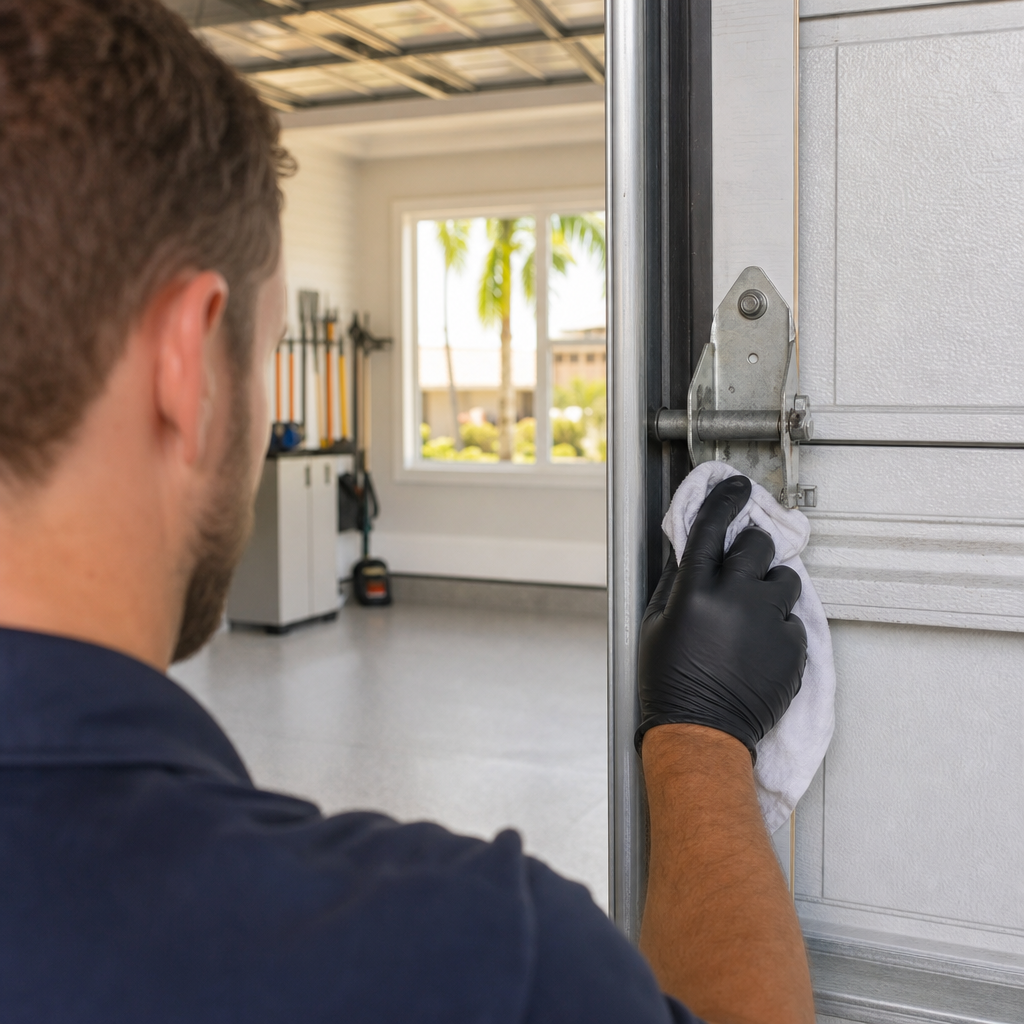
- Clean the track channels: Wipe away accumulated dirt, grit, and debris from the tracks to allow the rollers to move smoothly.
- Apply appropriate lubrication: Apply recommended garage door lubricants to moving hinges, bearings, and springs according to manufacturer instructions to reduce friction.
Frequently Asked Questions
Is it safe to operate a garage door that makes a grinding sound?
Operating a garage door that produces a grinding noise is generally not advised until the source is inspected, as continued operation under heavy friction may cause additional wear on the door components or opener.
Can I fix a grinding garage door with lubricant, or do parts need to be replaced?
Lubrication can help reduce friction on dry moving parts. However, if the grinding is caused by worn-out rollers, misaligned tracks, or damaged drive components, adjustment or replacement of those parts may be necessary.
How do I know if my garage door opener drive mechanism is worn?
If the motor operates or hums while the drive mechanism fails to move the door smoothly, internal drive components may be worn or experiencing excessive resistance.
Why does my garage door make a grinding noise only when opening or closing?
Grinding in one direction often indicates localized resistance, such as track alignment variations along specific sections of travel or changes in load during the cycle.
How much does it cost to repair a grinding garage door?
According to Complete Garage Door Repair Fort Myers, repair costs vary depending on the underlying cause, ranging from minor adjustments and routine maintenance to component replacement.
Need why is my garage door making a grinding noise?
We’re available now — call for a fast, free estimate.
Sources
- Quieting: a practical guide to noise control – nvlpubs.nist.gov
Related reading: Garage Door Roller Replacement Service | Call Now-10% Off | Same-Day Service | Free Estimate
Related reading: Garage Door Panel Replacement Fort Myers | Call Now-10% Off | Same-Day Service | Free Estimate
Related reading: Fix Garage Door Off Track Fort Myers | 10% Off & Free Estimate | On-Site in 60 Minutes
Frequently Asked Questions
What type of lubricant should I use to stop garage door grinding noises?
You should use a specialized silicone-based or white lithium spray on metal hinges, rollers, and springs, while avoiding heavy grease or standard WD-40 that attract debris into the tracks. If proper lubrication does not resolve the sound, contact Complete Garage Door Repair Fort Myers to inspect for worn hardware or track misalignment.
What happens if I continue operating a garage door with a grinding opener?
Continuing to run a grinding opener can strip internal drive gears completely, overheat the motor, or force the door off its tracks. Complete Garage Door Repair Fort Myers offers prompt same-day service to replace failing drive components with OEM parts before total mechanical failure occurs.
How do I know if my garage door grinding is caused by misaligned tracks?
Track-related grinding typically produces localized metal-on-metal scraping at specific points along the door travel path, often accompanied by visible rubbing against the track channels. Technicians from Complete Garage Door Repair Fort Myers can inspect track spacing and provide precision realignment across Southwest Florida to eliminate friction.
About the author
 |
Sarah Miller Sarah Miller is a technical writer specializing in home security and residential access systems, with a particular focus on garage door mechanisms. She holds a B.A. in Communications from Florida Gulf Coast University and has spent five years creating content for the home improvement and property management sectors in Southwest Florida. Her work translates complex mechanical concepts into clear, actionable advice for homeowners and property managers. |