
Quick Summary
Recognizing early signs you need garage door maintenance – such as loud grinding noises, jerky movement, frayed cables, and uneven balance – is critical to preventing sudden mechanical failures and expensive motor burnouts. Routine checks like the three-foot balance test and monthly auto-reverse inspections help catch silent mechanical strain before calling trusted experts like Complete Garage Door Repair Fort Myers for precision adjustments. By identifying subtle warning signs early, homeowners can safeguard their high-tension components and schedule timely service before minor wear turns into hazardous, costly breakdowns.
Signs You Need Garage Door Maintenance Before Costly Breaks
Most garage doors do not break down without warning. Long before a door gets stuck halfway or a torsion spring snaps with a loud bang, the system shows clear symptoms of mechanical strain. Recognizing the early signs you need garage door maintenance can save you hundreds of dollars in emergency service calls and prevent dangerous property damage.[2]
A common mistake homeowners make is assuming that as long as the door opens when they press the button, everything is working fine. In reality, modern openers can mask failing balance springs by pulling dead weight, creating a risk of motor burn-out. Here is what you need to watch for, how to test your system safely, and when to call a professional technician like Complete Garage Door Repair Fort Myers.
Early Warning Signs at a Glance
Quick diagnostic summary: Key warning signs include squeaking or grinding hardware, slow or jerky movement, uneven gaps along the floor, frayed cables, and failing the auto-reverse test. Catching these early protects your opener motor and keeps high-tension springs balanced.
Routine care prevents unexpected lockouts and expensive mechanical breakdowns. When springs, cables, and rollers work together in balance, your door should glide up and down with minimal effort.
Maintenance Overview
| Inspection Level | Recommended Frequency | What It Covers | Who Should Do It |
|---|---|---|---|
| Monthly Visual & Safety Check | Every 30 days | Photo-eye alignment, auto-reverse block test, visual check for cable fraying | Homeowner |
| Hardware Lubrication | Every 6 months | Steel rollers, hinges, bearing plates, and springs using garage-rated lubricant | Homeowner or Tech |
| Full Multi-Point Tune-Up | Annually | Spring balance calibration, track realignment, opener force limits, gear inspection | Certified Technician |
1. Grinding, Squeaking, or Scraping Hardware Noises
Unusual sounds during operation are one of the most reliable indicators of friction in your system. While no garage door is completely silent, sharp squeaks, popping sounds, or deep grinding noises require attention.
Dry Rollers vs. Failing Bearings
High-pitched squeaking usually means metal hinges and steel rollers are starving for lubrication. A low, rhythmic grinding or rattling noise, however, often points to failing end-bearing plates or worn motor drive gears. Applying a proper garage door lubricant (never standard WD-40, which strips grease and attracts grit) can quiet dry hinges, but grinding noises usually mean metal is actively wearing away.
The Silent Strain Problem
Waiting for loud screeches before scheduling service is a costly gamble. Tracks and roller stems can corrode and drag slightly without making dramatic sounds. This silent drag puts heavy extra load on your opener motor, creating a risk of premature drive gear failure weeks before you realize there was a problem.
2. Slow Opener Response and Stuttering Travel
Need signs you need garage door maintenance?
We’re available now — call for a fast, free estimate.
A properly tuned residential garage door should open and close at an even pace. If your door hesitates, stutters on its way up, or takes several seconds to react after you press the remote, the system is struggling against mechanical resistance.
Worn Rollers and Track Resistance
When roller bearings wear down or accumulate dirt, they stop spinning freely and begin sliding inside the track channel. This drag creates sudden resistance that makes the door jerk or pause mid-cycle. If you notice stuttering travel, check the track channels for debris or bent edges that might be pinching the wheels.
Logic Board and Capacitor Wear
Sluggish response can also stem from electrical issues inside the opener itself. Motor start capacitors lose capacitance over time, especially in hot garage environments. A weakened capacitor struggles to deliver the initial torque burst required to lift the door, making the opener sound like it is straining on startup.
3. Sagging Panels, Uneven Alignment, or Balance Failure
Your garage door counterweight system (the torsion or extension springs) does over 90 percent of the heavy lifting. The electric motor simply guides and controls the movement. When spring tension drops or cables stretch unevenly, the entire door falls out of balance.
The 3-Foot Manual Balance Test
You can verify whether your door is properly balanced in less than two minutes:
- Close the garage door completely.
- Pull the red manual disconnect cord to release the opener carriage.
- Grip the door handle and manually lift the door roughly three feet off the floor (about waist height).
- Carefully let go. A balanced door should stay firmly in place, supported by spring tension. If the door drops shut, the springs have lost tension. If it shoots upward, the springs are wound too tightly.
Gaps Under the Bottom Weather Seal
If you see daylight under one corner of the door while the other corner rests flat on the concrete, the door is hanging unevenly. This issue typically stems from uneven cable tension or shifted spring drums. Never try to adjust high-tension springs or bottom corner brackets yourself, as these components store extreme mechanical energy that can cause severe injury if released incorrectly.
4. Frayed Lift Cables and Corroded Torsion Springs
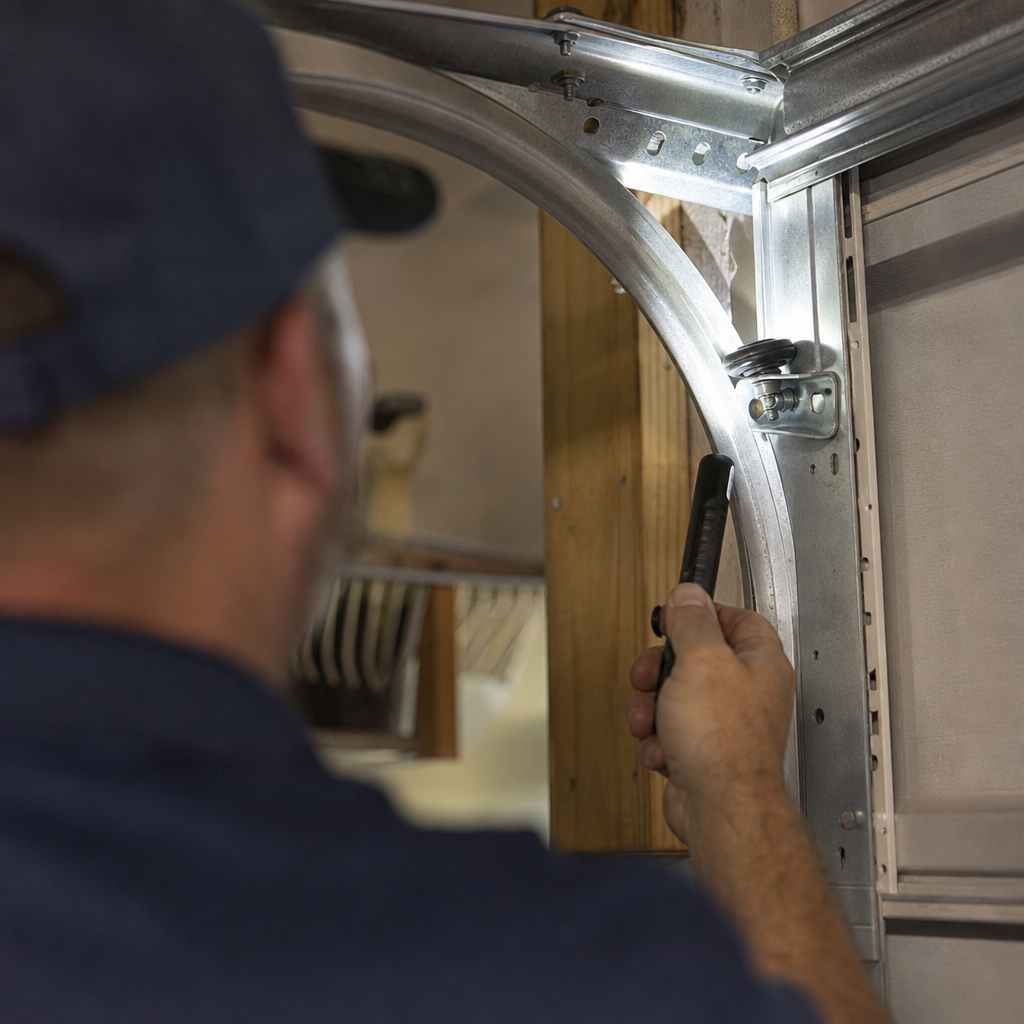
Cables and springs work under hundreds of pounds of constant tension. Over time, metal fatigue and moisture cause these parts to degrade. If a torsion spring snaps while someone is nearby, or if a cable breaks while the door is overhead, the door can drop instantly.
Spotting Cable Wear Before Snapping
Inspect the lift cables running from the bottom corner brackets up to the overhead drums. Look for individual wire strands unraveling, visible rust, or kinks in the cable line. If you see fuzzing or separation in the steel braid, replace the cables immediately.
Recognizing Broken Springs
A broken torsion spring usually announces itself with a sound like a loud gunshot inside the garage. If you inspect the spring mounted on the metal shaft above the door opening, you will see a clear two-to-three-inch gap where the steel coil has snapped. As noted by Complete Garage Door Repair Fort Myers, once a spring breaks, do not attempt to run the electric opener, as the motor cannot lift that dead weight and risks burning out its internal components or stripping gears.
5. Door Shaking on Tracks or Rollers Popping Out
A garage door should stay securely seated within its vertical and horizontal tracks throughout the entire cycle. If the panels shudder violently during travel or you notice roller stems backing out of their hinge sleeves, the track geometry has shifted.
Loose Track Brackets and Wall Anchors
Daily vibration, combined with house settling, frequently loosens the lag screws holding track brackets to the garage framing. If the tracks spread even a quarter of an inch wider than standard specifications, roller wheels can slip entirely out of the channel, leaving the door hanging precariously by only a few points of contact.[1]
Seized Roller Stems
Standard nylon and steel rollers contain small ball bearings that require occasional cleaning and lubrication. When these bearings lock up, the roller stem twists against the hinge mounting plate. This twisting force can crack the hinge metal and force the wheel to pop free as the door rounds the curved track radius.
6. Failed Auto-Reverse or Misaligned Photo-Eye Sensors
Need signs you need garage door maintenance?
We’re available now — call for a fast, free estimate.
Residential garage doors typically feature dual safety mechanisms: mechanical auto-reverse and optical safety eyes near the floor. If either feature fails, the door poses an immediate safety hazard to pets, children, and vehicles.[3]
The 2-Inch Block Safety Test
Test your mechanical auto-reverse system every month:
- Place a solid piece of 2×4 wood flat on the floor directly in the center of the door’s downward path.
- Press your wall console to close the door.
- When the bottom edge strikes the wood block, the door must immediately stop and reverse back to the fully open position.
If the door pushes down against the block without reversing, the opener down-force limit needs immediate professional recalibration. Do not use the automatic opener until this is corrected.
Sensor Alignment and Diagnostic Lights
The safety photo-eyes sit on either side of the garage door opening near the floor. If the lenses get covered in cobwebs or bumped out of alignment, the small LED indicator lights on the sensor housings will flicker or turn off completely. When this happens, the opener will refuse to close from the remote and will flash its overhead courtesy lights to signal an obstruction fault.
7. Cracked Bottom Seals and Weather Infiltration
Perimeter seals are your garage door’s first line of defense against driving rain, blowing debris, and pest intrusion. Over time, environmental exposure causes the rubber bottom astragal seal to dry out, flatten, and crack.
If you see daylight beneath the closed door or find water pooling inside the garage after a rainstorm, the bottom seal has failed. Replacing worn perimeter weatherstripping keeps conditioned air inside and prevents moisture from rusting the bottom track brackets and hardware.
8. Opener Motor Runs Continuously Without Moving the Door
If you press your remote, hear the electric motor whirring loudly, but the door panels do not move at all, the drive train has physically disconnected from the door.
Stripped Internal Drive Gears
Most chain-drive and belt-drive openers use a nylon drive gear inside the main motor housing to turn the drive sprocket. If the door becomes too heavy due to a broken spring, the metal motor shaft will grind down the nylon gear teeth until they are stripped smooth. In this scenario, the motor spins freely, but no power reaches the chain or belt.
Checking the Emergency Release Carriage
Before assuming the motor is broken, check the emergency release carriage on the central rail. If someone pulled the red emergency cord, the carriage trolley might be disengaged from the drive belt or chain. Pull the cord back toward the opener motor and run the opener one full cycle to let the trolley click back into place automatically.
Frequently Asked Questions
What are the most common warning signs of a failing garage door?
The clearest warning signs include loud squeaking or grinding noises, hesitation or shaking during travel, sagging on one side when opening, loose or frayed lift cables, and a door that feels extremely heavy when lifted manually.
How often should a residential garage door receive professional maintenance?
Homeowners should perform a quick visual inspection and safety reversal test every month. A certified garage door technician should complete a full multi-point tune-up, spring balance check, and hardware calibration once every year.[4]
Why is my garage door making loud grinding noises?
Grinding sounds usually indicate that metal hardware is rubbing without adequate lubrication, track channels have bent out of alignment, or the nylon drive gears inside your electric opener motor have begun to strip under excess load.
Can I adjust garage door springs myself?
No. Torsion and extension springs operate under intense mechanical tension. Attempting to adjust or replace springs without proper winding bars and training can result in severe physical injury. Always have a trained professional handle high-tension spring and cable repairs.
What happens if my garage door fails the auto-reverse test?
If your door fails to reverse automatically when hitting an object, stop using the automatic opener immediately. A door that does not reverse is an active safety hazard. Switch the door to manual mode and call a professional technician, such as Complete Garage Door Repair Fort Myers, to adjust the opener force limits.
Need signs you need garage door maintenance?
We’re available now — call for a fast, free estimate.
Sources
- blk_pdf_523 – cpsc.gov
- National Electronic Injury Surveillance System (NEISS) – cpsc.gov
- Garage Door Inspection: DASMA guide – forum.nachi.org
- Safety & Maintenance – IDA – International Door Association – doors.org
Related reading: Garage Door Tune Up Cost Fort Myers | 10% Off & Free Estimate | Same-Day Service
Related reading: Hire Garage Door Maintenance Service Fort Myers | 10% Off & Free Estimate | Same-Day Service
Frequently Asked Questions
How does Florida's coastal climate accelerate garage door wear and tear?
High humidity and salty air speed up oxidation on high-tension steel springs, roller bearings, and lift cables, causing premature metal fatigue and rust binding. Complete Garage Door Repair Fort Myers recommends applying specialized corrosion-resistant lubricants and scheduling regular seasonal tune-ups to prevent sudden mechanical breakdowns.
What type of lubricant should be used on garage door hardware instead of WD-40?
Homeowners should apply a garage-rated silicone or white lithium spray designed specifically for high-friction overhead door mechanisms. Traditional WD-40 acts as a degreasing solvent that strips existing grease and attracts dust, which accelerates wear on steel rollers and hinges.
Can operating an unbalanced garage door permanently burn out the opener motor?
Yes, an electric opener is engineered only to guide balanced weight, not lift the full dead weight of heavy door panels. Forcing the motor to pull an unbalanced door rapidly strips internal nylon drive gears and burns out start capacitors, requiring full motor repairs from Complete Garage Door Repair Fort Myers.
About the author
 |
Sarah Miller Sarah Miller is a technical writer specializing in home security and residential access systems, with a particular focus on garage door mechanisms. She holds a B.A. in Communications from Florida Gulf Coast University and has spent five years creating content for the home improvement and property management sectors in Southwest Florida. Her work translates complex mechanical concepts into clear, actionable advice for homeowners and property managers. |